Kashi Vishwanath Temple
Hello Everyone My Name is Vivek Chaturvedi. I am writing a vlog about Kashi Vishwanath Temple.
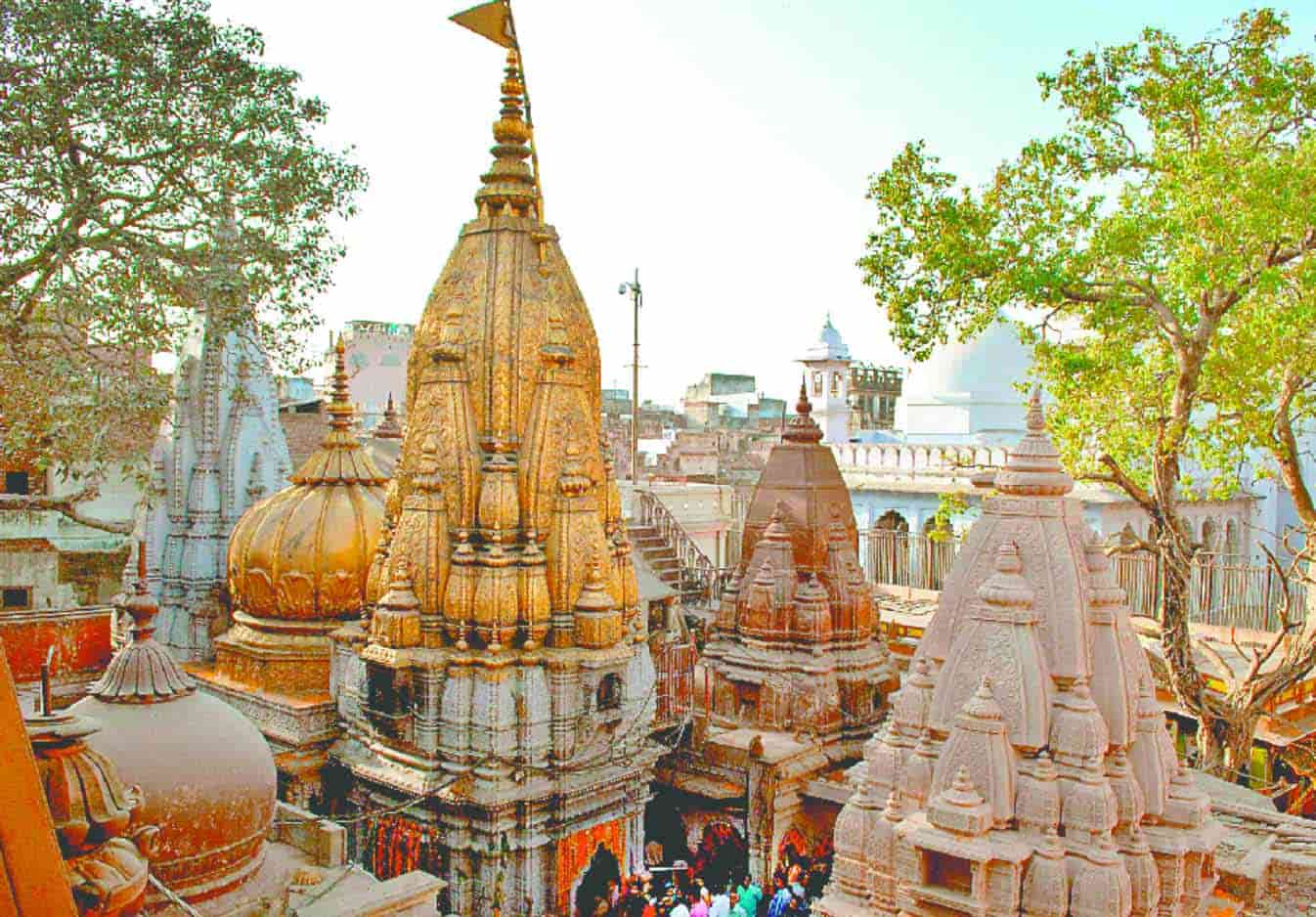
The Temple has been referred to in Hindu scriptures for a very long time as a central part of worship in the Shaiva Philosophy. It had been demolished by many Muslim rulers many times, last time It was demolished by Aurangzeb, the sixth Mughal emperor who constructed the Gyanvapi Mosque on its site. The current structure was built on an adjacent site by the Maratha ruler, Ahilya Bai Holkar of Indore in 1780.
Since 1983, the temple has been managed by the government of Uttar Pradesh. During the religious occasion of Shivratri, Kashi Naresh (King of Kashi) is the chief officiating priest.
Jyotirlingas

As per the Shiv Mahapuran, once Brahma (the Hindu God for creation) and Vishnu (the Hindu God for protection) had an argument about creation. To test them, Shiva pierced the three worlds as a huge endless pillar of light, the jyotirlinga. Vishnu and Brahma split their ways to search downwards and upwards respectively to find the end of the light in either direction. Brahma lied that he found out where it ends, while Vishnu conceded defeat. Shiva appeared as the second pillar of light and cursed Brahma that He would have no place in ceremonies while Vishnu would be worshipped till the end of eternity. The jyotirlinga is the supreme partless reality, out of which Shiva partly appears. The jyotirlinga shrines, thus are places where Shiva appeared as a fiery column of light.
There are 64 forms of Shiva, not to be confused with Jyotirlingas. Each of the twelve jyothirlinga sites take the name of the presiding deity - each considered different manifestation of Shiva. At all these sites, the primary image is lingam representing the beginningless and endless Stambha pillar, symbolizing the infinite nature of Shiva. The twelve jyothirlinga are Somnath in Gujarat,
Vishnu and Brahma split their ways to downwards and upwards respectively to find the end of the light in either direction. Brahma lied that he found out the end, while Vishnu conceded his defeat. This lie of Brahma angered Shiva making him curse Brahma that even though he is the creator of the universe he would not be worshipped. The jyotirlinga is the Supreme Shiva, partless reality, out of which Shiva appeared in another form, Lingodbhava. The jyotirlinga shrines are temples where Shiva appeared as a fiery column of light.
Originally there were believed to be 64 jyotirlingas while twelve of them are considered to be very auspicious and holy. Each of the twelve jyotirlinga sites take the name of the presiding deity, each considered a different manifestation of Shiva. At all these sites, the primary image is lingam representing the beginningless and endless Stambha pillar, symbolising the infinite nature of Shiva.
The twelve jyotirlingas are:
- Somnath in Gir Somnath, Gujarat
- Mallikarjuna in Srisailam, Andhra Pradesh
- Mahakaleshwar in Ujjain, Madhya Pradesh
- Omkareshwar in Khandwa, Madhya Pradesh
- Kedarnath in Rudraprayag, Uttarakhand
- Bhimashankar in Pune, Maharashtra
- Kashi Vishwanath in Varanasi, Uttar Pradesh
- Trayambakeshwar in Nashik, Maharashtra
- Vaidyanath in Deoghar, Jharkhand
- Ramanathaswamy (Rameshwar) in Rameswaram, Tamil Nadu
- Ghrishneshwara in Aurangabad, Maharashtra
In 1669 CE, Emperor Aurangzeb destroyed the temple and built the Gyanvapi Mosque in its place. The remains of the erstwhile temple can be seen in the foundation, the columns and at the rear part of the mosque.

The temple was managed by a hereditary group of pandits or mahants. After the death of Mahant Devi Dutt, a dispute arose among his successors. In 1900, his brother-in-law Pandit Visheshwar Dayal Tewari filed a lawsuit, which resulted in him being declared the head priest.
Structure

According to the structure of the temple, there is a Sabha Griha or Congregation Hall leading to the inner Garbha Griha or Sanctum Sanctorum. The venerable Jyotirlinga is a dark brown colored stone which is enshrined in the Sanctum, placed on a silver platform. Structure of the Mandir is composed of three parts. The first compromises a spire on the Mandir of Lord Vishwanath or Mahadeva. The second is gold dome and the third is the gold spire atop Lord Vishwanath carrying a flag and a trident.
The Kashi Vishwanath temple receives around 3,000 visitors every day. On certain occasions, the numbers reach 1,000,000 and more. Noteworthy about the temple is 15.5-metre-high gold spire and gold dome. There are three domes each made up of pure gold, supplied by Maharaja Ranjit Singh in 1835.
After lockdown Please go one in your life Kashi Vishwanath Temple.
Thanks for Reading. Please comment me if you like my blog. Please share with your family member and friends.


Comments